
HTTP Proxies Meaning and How They Work
ProxiesLearn the meaning of HTTP proxies, how they process web requests, their potential benefits, limitations, and what to consider when choosing one.
HTTP Proxies Meaning and How They Work: An HTTP proxy sits between your device and a website. It forwards requests and returns responses. It can support privacy, filtering, access, and performance needs.
Understanding HTTP
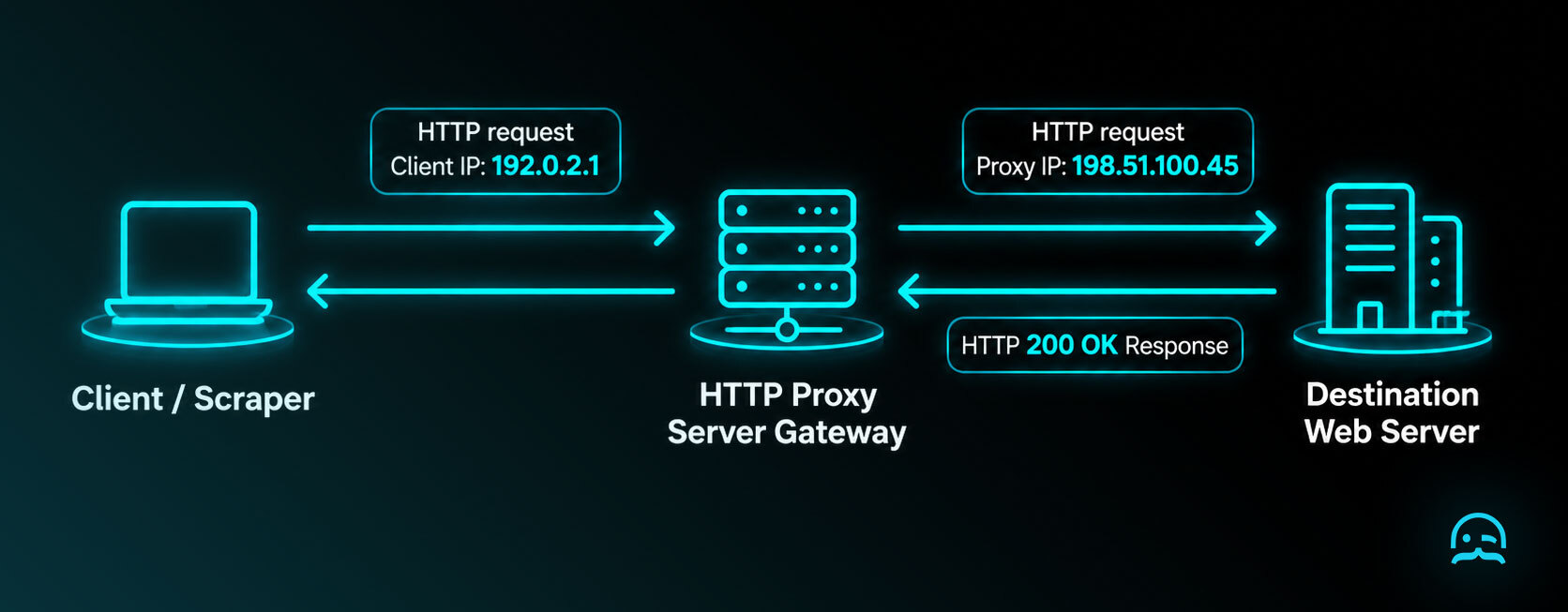
Before diving into proxies, let’s cover the basics: HTTP, or HyperText Transfer Protocol. This protocol is the standard language that web browsers and servers use to talk to each other. When you type in a website URL and hit enter, your browser sends an HTTP request to the server. The server then replies with an HTTP response, delivering the website’s content to your screen.
What is an HTTP Proxy?
An HTTP proxy acts as a middleman between your device and the internet. Instead of connecting to websites directly, your device first communicates with the proxy server. The proxy then forwards your requests to the websites and sends the responses back to you. This extra layer can provide several advantages.
How Does an HTTP Proxy Work?
HTTP Proxies Meaning and How They Work is the request path in which an intermediary handles communication between a client and website server. When a computer or smartphone requests a website, the HTTP proxy receives the request instead of sending it directly to the destination. It forwards that request on the client's behalf. After the website server processes it and returns data, like a webpage, the proxy gets the response. It may filter or review it as needed. Then it sends the result to the client. This request-and-response flow is the core of the proxy servers and tunneling guidance. HTTP proxies can support content filtering, performance improvements, and privacy. They can block unwanted content. They can improve access to frequently visited sites. They can help hide the client’s IP address from the website. As a trusted gateway, a proxy controls communication between clients and websites. Its filtering and forwarding can help keep that exchange secure and efficient.
HTTP Proxies Meaning and How They Work
import http.client
import ssl

proxy = ("proxy.example", 8080)
target = "example.com"

connection = http.client.HTTPSConnection(*proxy, context=ssl.create_default_context())
connection.set_tunnel(
    target,
    443,
    headers={"Host": f"{target}:443"},
)
connection.request("GET", "/", headers={"Accept": "text/html"})
response = connection.getresponse()
print(response.status, response.reason)
print(response.read(200).decode("utf-8", errors="replace"))
connection.close()
Benefits of HTTP Proxies
Using an HTTP proxy provides several advantages, making it a useful tool for both personal and professional purposes. Here are some key benefits:
- Privacy Protection: By hiding your IP address, an HTTP proxy makes it harder for websites to track you online.
- Security: Many HTTP proxies offer content filtering and malware protection, ensuring a safer browsing experience.
- Access geo-restricted content. If the content is blocked in your location, use a proxy in another region. This can help you access it.
- Performance Optimization: Proxies can speed up load times. They cache often visited websites. This reduces how far data must travel.
For more details about other proxy benefits, read our earlier post. It is called "Understanding Residential Proxies: How They Work and Why They Matter". It explains proxies that add another privacy layer by routing traffic through real residential IPs.
Beyond MrScraper: When Do You Need an HTTP Proxy?
While MrScraper isn’t primarily an HTTP proxy service, proxies are helpful in a range of situations:
- For Privacy Lovers: If you’re concerned about your online privacy, proxies can help keep your activity hidden.
- For Travelers: Proxies make it easier to access region-locked content when you’re abroad.
- For Businesses: Companies use proxies for content filtering, enhancing security, and managing their internet traffic.
Keep in mind: Free Proxies: These might be slow, unreliable, or pose security risks. Paid Proxies: Paid options generally offer better speed, performance, and security features.
Finding the Right Proxy
For HTTP Proxies Meaning and How They Work, choose according to your needs, weighing privacy, speed, accessibility, and budget.
HTTP Proxies Meaning and How They Work: SOCKS5
Understanding HTTP proxies and how they work is a key distinction when choosing a scraping route. MDN’s guide to proxy servers and tunneling provides useful protocol context.
import os
import requests

proxy = os.environ["PROXY_URL"]  # http://... or socks5h://...
proxies = {"http": proxy, "https": proxy}
response = requests.get("https://example.com", proxies=proxies, timeout=20)
response.raise_for_status()
print(response.status_code, len(response.content))
HTTP Proxies – Allies or Anomalies?
HTTP proxies can be incredibly useful for boosting your privacy, security, and sometimes even unlocking restricted content. But they’re not without limits, so be sure to choose a reliable service that suits your needs. While MrScraper isn’t an HTTP proxy service, it’s a powerful tool for efficient web scraping. Stay tuned for more blog posts on scraping techniques and data extraction tips!
What We Learned
HTTP proxies work by having your client send a request to the proxy. The proxy then contacts the destination and returns the response through that intermediary.
- Use the request-path checklist: identify the client, proxy, destination, and response direction.
- Treat privacy, filtering, caching, and regional access as possible uses, not automatic guarantees.
- Choose a service based on reliability, security, performance, and the rules governing your traffic.
Explore Practical Data Extraction Workflows
Use this quickstart resource to explore how proxy concepts can fit into automated data extraction workflows with MrScraper.
Summarize this post
Open it in your assistant of choice with the prompt ready to send.
Take a Taste of Easy Scraping!

Find more insights here

Use Prompt Caching for Repeated Analysis of Web Documents
Use your LLM provider's prompt caching when you analyze many extracted web pages. Keep stable prompt…

Measure and Reduce LLM Token Use in Web Data Applications
Measure how many LLM tokens HTML, Markdown and field-only JSON use for the same pages, check answer…

Build a Knowledge Graph From Web Pages With Source Provenance
Turn permitted web pages into an evidence-backed knowledge graph. Define entities and relationships,…