OpenCode vs Claude Code: Open Source vs Managed in 2026
TechnologyClaude Code is managed and locked to Anthropic models. OpenCode is open source and runs 75+ providers. Compared on cost, terminal UX and real coding output.
When evaluating opencode vs claude code, the core question is whether you want a polished managed product or raw model flexibility. I have been using Claude Code for months, appreciating how well it integrates with Anthropic models out of the box. But recently, I noticed the high per-token pricing adding up during long refactoring sessions. You hear that OpenCode is a free open source coding agent that works with any model. The pitch sounds perfect: get the same terminal experience without the vendor lock-in.
But "free and open source" is rarely completely free. You still pay for tokens, and you often pay with your time. I wanted to know if this model-agnostic coding agent actually holds up in daily work, or if it is just a weekend configuration project. I installed OpenCode, connected it to various providers, and ran real work through both tools to see how they compare.
This is a hands-on look at claude code vs opencode in practice. I will show you exact costs, terminal screenshots, and what actually happens when you switch from a walled garden to an open ecosystem.
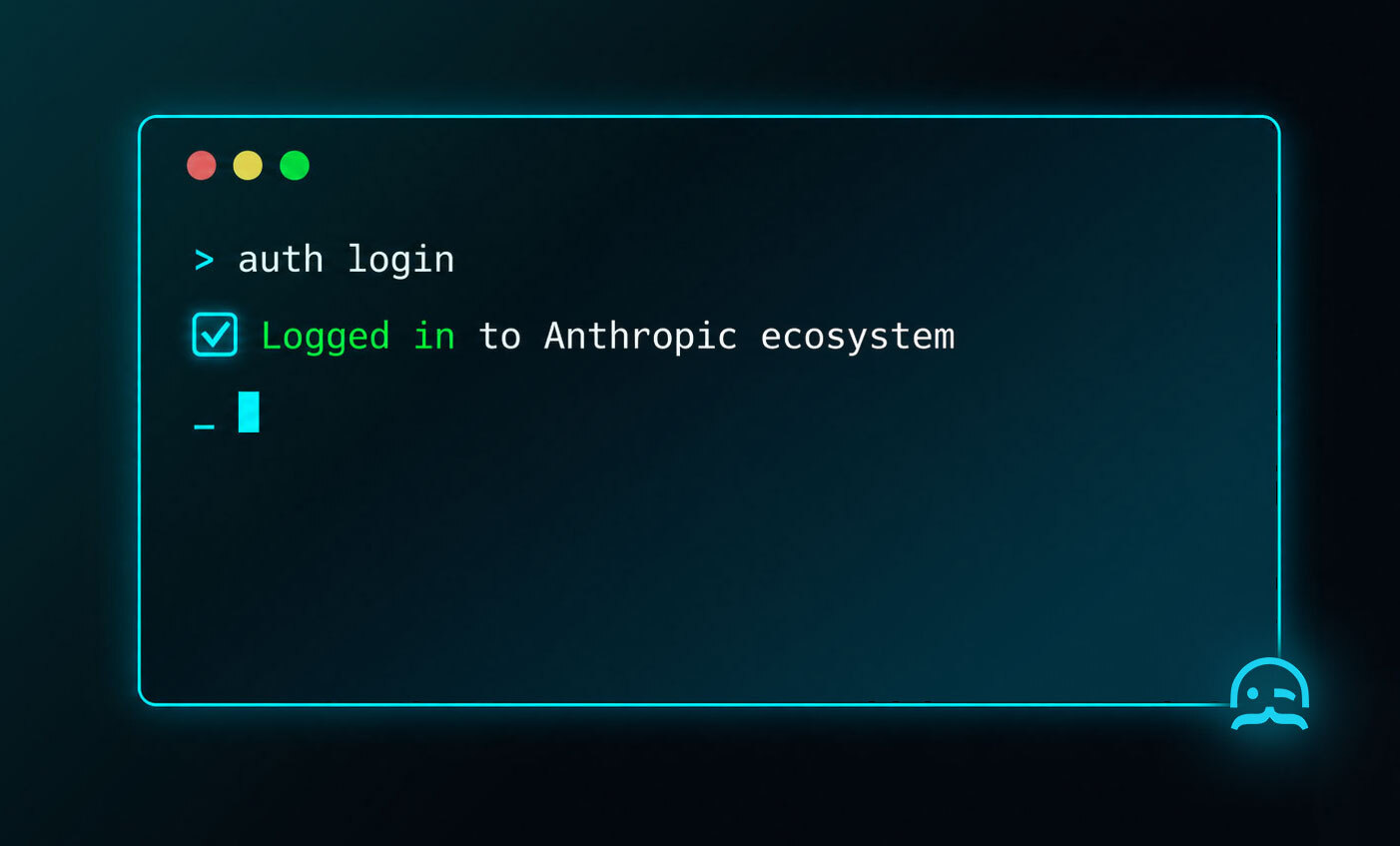 Claude Code’s clean TUI makes authentication and model management seamless.
The Core Difference: OpenCode vs Claude Code
At a fundamental level, the difference between these two tools is architectural. Claude Code is a managed, proprietary agent built exclusively for Anthropic's models. It is designed to work flawlessly with Opus 4.8, Sonnet 4.6, and Haiku 4.5. You install it, log in with your Anthropic account, and it just works. The agent harness is tuned perfectly to the nuances of Claude's system prompts.
OpenCode, on the other hand, is an open source coding agent. It acts as an operating system for LLMs. It is completely model-agnostic. Out of the box, it connects to 75+ providers through the Models.dev network. You can run OpenAI, Google, Anthropic, or specialized coding models like DeepSeek and Qwen3-Coder. If you want true privacy, you can run models locally using Ollama or LM Studio.
This flexibility makes OpenCode an incredibly powerful claude code alternative, but it shifts the configuration burden entirely onto you. You are responsible for managing API keys, selecting the right model for the right task, and dealing with the occasional friction when a model misinterprets a tool call. Knowing the nuances of opencode vs claude code is crucial for a smooth developer experience.
Can you still use a Claude subscription with OpenCode?
Let's address the biggest question first. If you are paying for Claude Pro or one of the higher tiers like Claude Max 5x or Claude Max 20x, you probably want to use that subscription with your ai coding cli. After all, if you are already paying a flat monthly fee for access to the smartest models, paying per-token on top of that feels absurd.
As of August 2026, you cannot use your Claude Pro or Claude Max subscription directly with OpenCode. Anthropic restricts third-party tools from tapping into the consumer subscription allowance. When you use OpenCode with Anthropic models, you must provide an API key and pay standard per-token pricing.
This policy change caught many developers off guard. Initially, some third-party wrappers found ways to proxy web session tokens into CLI tools. However, Anthropic aggressively patched these workarounds to protect their infrastructure. The reasoning is straightforward: automated agents consume tokens at an exponential rate compared to human chat users. A human might type a prompt every five minutes; a terminal agent might run twenty background loops, read a massive context window of files, and execute a dozen shell commands in thirty seconds.
This means you are paying twice if you maintain your subscription while using OpenCode for Opus 4.8 or Sonnet 4.6. The Claude Code CLI, being an official product, integrates seamlessly with your subscription. OpenCode acts as a BYOK (bring your own key) agent harness. You pay for the open source software with freedom, but you pay for the intelligence per token.
If your primary goal is to use your existing subscription without paying extra, Claude Code remains the necessary choice. But if you are willing to drop the subscription and shift entirely to pay-as-you-go—or if you want to explore cheaper open models—the math changes significantly.
Is OpenCode actually cheaper? A real-world cost comparison
To see if OpenCode is genuinely cheaper or just an illusion of savings, I ran the same task through both tools. The task was building a complex React data table component. It required sorting, pagination, a complex filter state, and deep integration with an existing mocked backend service in a Next.js application.
In Claude Code, using Sonnet 4.6, the agent completed the task perfectly in three steps. It read the existing codebase, generated the component, and updated the CSS. The total context window usage was around 45,000 input tokens and 2,000 output tokens. At standard API rates, this would cost roughly $0.16. Under a Claude Max 5x subscription, it just eats a small chunk of your daily allowance. For comparison, you can read our breakdown on codex vs claude code to see how it historically performed against earlier tools.
Then I switched to OpenCode. Because OpenCode is model-agnostic, I decided to test it with a much cheaper model. I configured the Zen gateway in OpenCode to route my request to Qwen3-Coder.
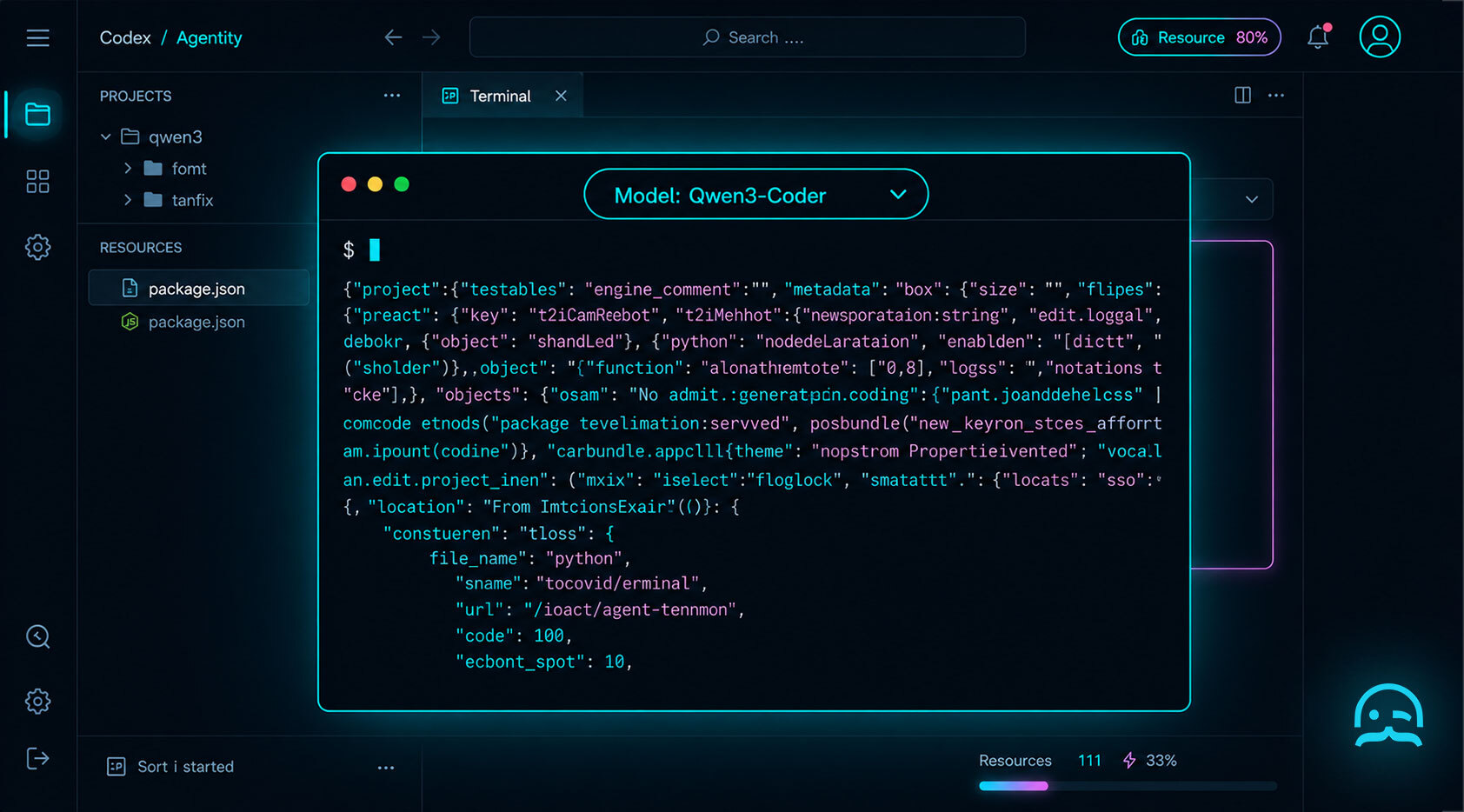 The OpenCode terminal UX makes swapping to a cheaper model like Qwen3-Coder seamless mid-session.
Qwen3-Coder tackled the exact same React component task. It required four steps instead of three, having to correct a missed CSS import. Because it costs a fraction of Anthropic's flagship models, the total cost for 50,000 input tokens and 2,500 output tokens was barely $0.02.
If you do this twenty times a day, Claude Code via API costs $3.20 daily, while OpenCode with Qwen3-Coder costs $0.40. You can also run Kimi K2 or DeepSeek for similar savings. If you want to eliminate token costs entirely, you can spin up Ollama or LM Studio to run models entirely locally for free. The opencode anthropic cost delta is real, provided you are willing to accept slightly more steering for cheaper models.
Terminal UX and model-agnostic flexibility
The strongest argument for OpenCode is its interface. While Claude Code offers a clean TUI (terminal user interface), OpenCode feels like a comprehensive operating system for LLMs. The flexibility extends far beyond just swapping backend providers.
When you launch OpenCode, you are greeted with a session model picker. You do not just set a default model and forget it. You can start a session with a fast, cheap model like Haiku 4.5 or MiniMax to scaffold the boilerplate, then swap to Opus 4.8 or GPT-5.5 mid-session for the complex logic. This granular control over your agent harness means you never overpay for simple tasks.
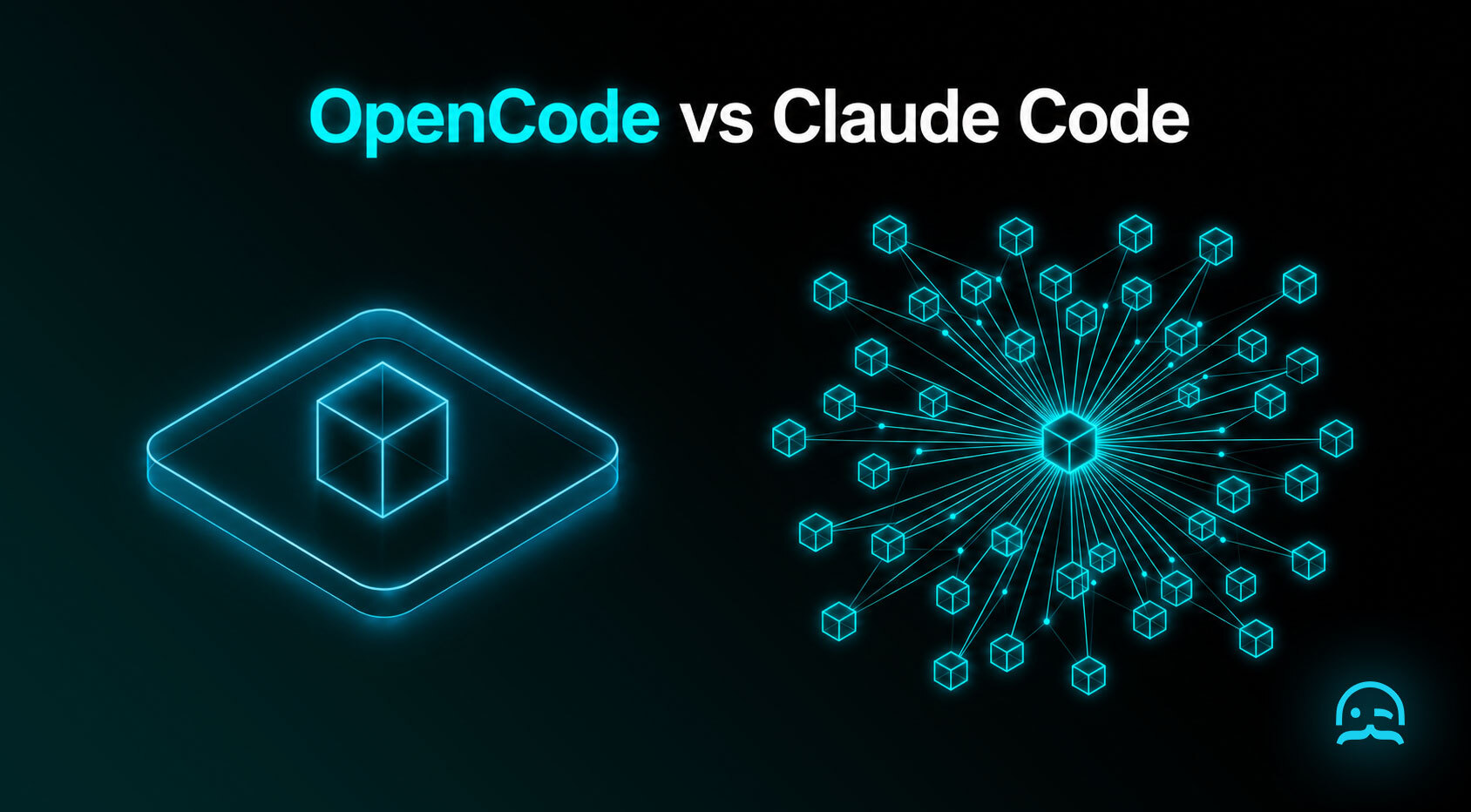 Claude Code provides a managed walled garden, while OpenCode connects to 75+ providers through Models.dev.
OpenCode routes through Models.dev natively, giving you access to 75+ providers. If Anthropic goes down, you are not blocked. You just switch to GLM or an OpenAI-compatible endpoint. This makes it a true claude code alternative for developers who refuse to rely on a single vendor. In the broader debate of opencode vs claude code, this provider independence is the strongest selling point for OpenCode.
Both tools support MCP, allowing them to read local files, execute commands, and fetch external data. This is critical for advanced workflows like agentic search where the agent needs to query live documentation. Both tools support MCP, so a web-data server works in either one. MrScraper's Web Scraper API returns clean structured data rather than raw HTML, which keeps token use down — and that matters more in OpenCode, where you pay per token.
For those scraping modern sites, checking out the best web search APIs or learning about JavaScript crawling can help you feed these agents the right context without bloating your token bill.
What do you actually give up by leaving the managed product?
When you choose an open source coding agent like OpenCode over a managed product, you take on invisible maintenance burdens. Claude Code handles things you stop noticing until they are gone. When evaluating opencode vs claude code, you have to weigh these hidden costs.
First, you give up seamless authentication and billing. In Claude Code, you run a single login command and your billing, context limits, and model access are managed automatically by Anthropic. In OpenCode, you manage a .env file full of API keys for SST, OpenAI, and Anthropic. When a key rotates, a credit card expires on a random provider, or an API changes its endpoint, you are the one debugging the connection timeout.
Second, you lose the tight integration with the Claude desktop app. Claude Code shares history and context seamlessly with the Anthropic ecosystem. OpenCode sessions live isolated in your terminal. While OpenCode supports an LSP (language server protocol) for editor integration, it lacks the polished cross-device sync of a commercial product.
Finally, you give up guaranteed model alignment. Claude Code is tuned explicitly for Sonnet and Opus. OpenCode uses a generalized prompt structure to support 75+ models. When you use Qwen3-Coder or DeepSeek, the agent sometimes misinterprets tool calls. You trade absolute reliability for absolute freedom.
Permissions and safety defaults
If you point an AI agent at a production codebase, permissions matter. This is where opencode vs claude diverges sharply in philosophy.
Claude Code takes a highly conservative approach. By default, it asks for confirmation before executing any shell command, modifying core files, or installing dependencies. It reads a CLAUDE.md file for project-specific instructions, but it maintains strict boundaries on what it can execute automatically. It assumes the user wants to stay in the loop for anything destructive.
OpenCode defaults to maximum velocity. Out of the box, it often executes bash commands without prompting, assuming the user wants an uninterrupted flow. It reads AGENTS.md and SKILL.md files for deep project context, leverages llms.txt when fetching external documentation, and fully supports autonomous Subagents, Plugins, and Hooks.
This permissiveness is a double-edged sword. If you are scaffolding a personal side project, OpenCode feels incredibly fast. You can ask it to "setup a Next.js app with Tailwind and a Postgres database" and it will just do it, executing dozens of commands silently. But if you are working in a corporate monorepo, a rogue rm -rf or a bad git command executed automatically by a confused open model is a disaster waiting to happen. You must configure OpenCode's safety limits before using it for serious work. This difference in defaults is the most critical distinction in any opencode vs claude code comparison.
Extensibility: Skills, Plugins and Subagents
One area where OpenCode unequivocally shines is extensibility. By creating a simple SKILL.md file in your repository, you can teach the agent highly specific workflows.
Furthermore, OpenCode supports Subagents. You can spawn multiple agents in parallel to tackle different parts of a codebase. Claude Code is currently restricted to a single linear thread of execution, making OpenCode much faster for complex, multi-file refactoring tasks. Both tools support MCP, but OpenCode's implementation is deeply integrated into its plugin architecture, allowing you to mount custom tools dynamically during a session.
 Ready to power your agents with clean structured data? Schedule a personalized demo today to see how our extraction APIs handle the messy work so your models don't have to.
Frequently asked questions
Can I use my Claude Pro or Max subscription with OpenCode?
No. As of late 2026, Anthropic restricts third-party API access via consumer subscriptions. To use Anthropic models within OpenCode, you must provide your own API key and pay standard per-token pricing, regardless of your subscription status.
Why did Anthropic block third-party tools from using Claude subscriptions?
Anthropic blocked this to prevent abuse and manage infrastructure costs. Subscriptions offer high, unmetered usage for chat interfaces, while automated terminal agents consume tokens exponentially faster by constantly reading files and running background loops.
Is OpenCode actually cheaper than Claude Code?
Yes, if you use cheaper models. Running OpenCode with open models like Qwen3-Coder or DeepSeek costs pennies compared to Anthropic's API pricing. However, if you run Opus 4.8 through OpenCode via API, it costs exactly the same as using Claude Code on pay-as-you-go.
Is OpenCode as good as Claude Code?
It depends on the model you attach. When looking at opencode vs claude code purely from an output perspective, OpenCode with Sonnet 4.6 is nearly identical in performance to Claude Code. When using cheaper open models, OpenCode requires more manual steering and correction, but its terminal UX and flexibility make up for the raw intelligence gap.
Which open models come closest to Claude in OpenCode?
Currently, DeepSeek and Qwen3-Coder perform exceptionally well for coding tasks within OpenCode. They follow the agent harness tool calls reliably and offer context windows large enough to handle most standard refactoring jobs without hallucinating syntax errors.
Can I run a local LLM with OpenCode?
Yes. OpenCode natively supports local execution through Ollama and LM Studio. You can route the agent to any BYOK or OpenAI-compatible endpoint running on your local machine, allowing for completely free, offline, and private code generation.
Does OpenCode support skills, plugins and MCP?
Yes. OpenCode has extensive extensibility. It fully supports the Model Context Protocol (MCP) for connecting external tools, and allows you to define custom Skills, Subagents, and Plugins to tailor the agent's capabilities to your specific workflow.
Does OpenCode read AGENTS.md and CLAUDE.md?
OpenCode natively parses AGENTS.md and SKILL.md to understand project rules and architectural guidelines. While it is not designed explicitly for CLAUDE.md, you can configure its context loader to parse existing Anthropic instruction files.
Is OpenCode safe to use given its permissive defaults?
OpenCode is safe if configured correctly, but its default settings prioritize speed over safety. It will often execute shell commands without asking. You should immediately adjust its permission settings to require manual confirmation for destructive commands.
Should I use both OpenCode and Claude Code?
Yes. Many developers use Claude Code for complex, architecture-level refactoring where Sonnet 4.6 shines, and keep OpenCode installed for rapid, low-cost scaffolding tasks using local or cheaper open-source models.
Summarize this post
Open it in your assistant of choice with the prompt ready to send.
Take a Taste of Easy Scraping!

Find more insights here
What is Scraping? A Complete Beginner's Guide for 2026
Learn what a web scraper is in 2026 and how AI-powered tools are replacing brittle CSS scripts for r…
The Ultimate Web Crawlers List: 15 Tools for Every Data Need
Compare the best web crawlers for 2026. Learn the difference between open-source, managed APIs, and…
Web Scraping MCP Server: Giving AI Agents Direct Access to Live Web Data
Learn how a Web Scraping MCP Server gives AI agents live web access while reducing token costs by 87…