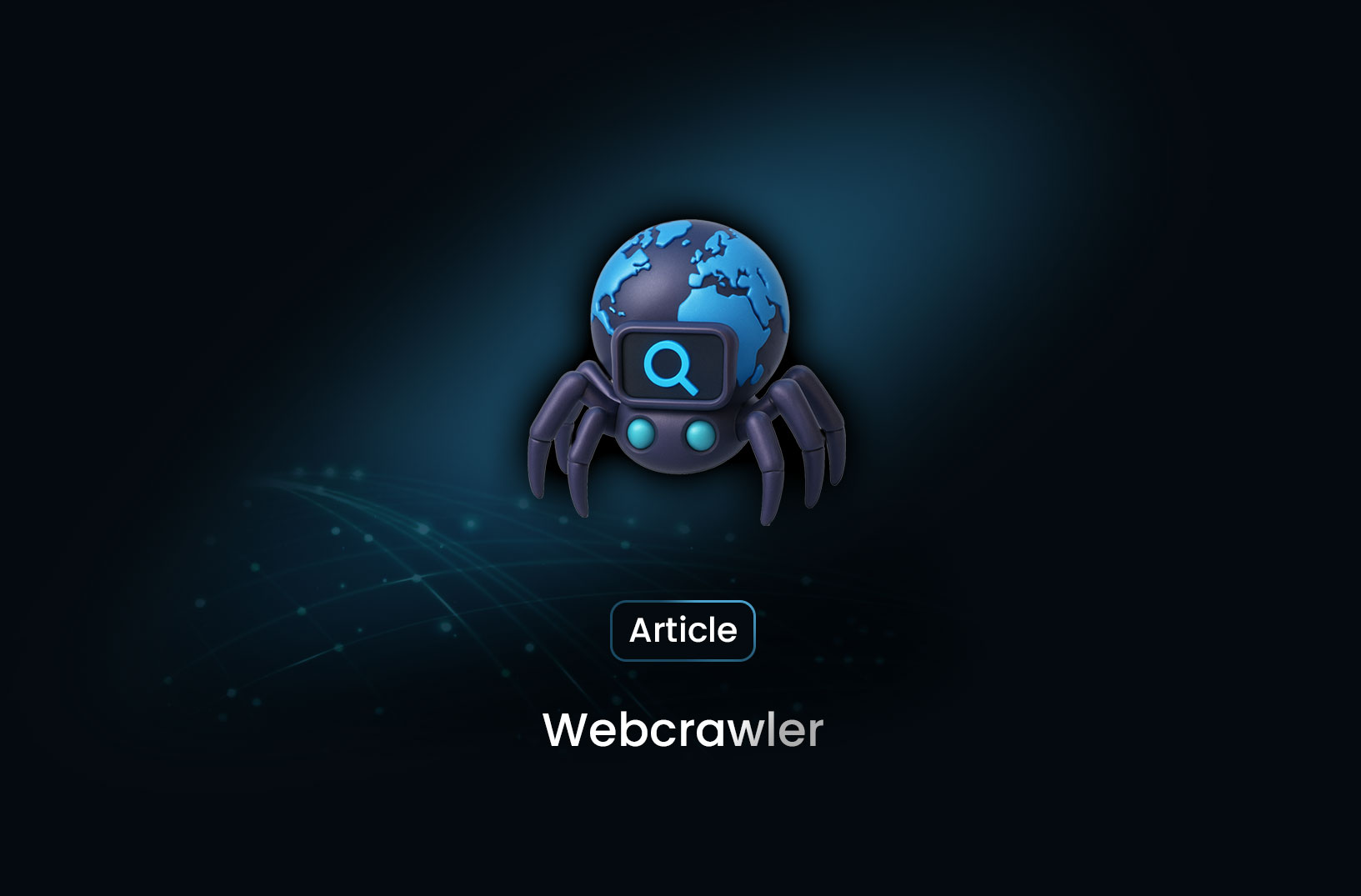
No-Code Web Scraper: How Webcrawlers Work and Why They Matter
Web ScrapingLearn how webcrawlers discover, retrieve, and index content, how they differ from web scrapers, and which crawling practices support responsible data collection.
A no-code web scraper pulls specific data from chosen pages without coding. A web crawler finds and collects many pages, links, and content for indexing, audits, archiving, or analysis.
What Is a Webcrawler?
Published June 23, 2025. A webcrawler, also known as a spider, bot, or spiderbot, is an automated program. It browses the web to find and index content. A no-code web scraper is a related tool for collecting page data without writing crawler code. Webcrawlers scan web pages by visiting URLs and following links across sites. Search engines typically operate them to build indexes of the web, supporting services such as Google, Bing, and DuckDuckGo. Enterprises and other tools can also crawl internal sites, archive content, or conduct SEO audits.
How Does a Webcrawler Work?
A no-code web scraper can use the same basic steps as a web crawler. It can find URLs, fetch pages, index content, and follow crawling rules.
- Seed URLs and discovery. Crawlers start with known URLs, called seeds, and add links found while processing pages.
- Content retrieval. They fetch pages through HTTP requests and extract HTML, metadata, links, images, and embedded content.
- Indexing. Retrieved content is stored in a searchable index for later use by search engines or applications.
- Crawling policies. Crawlers follow robots.txt restrictions, revisit schedules, and politeness rules such as rate limiting. They may prioritize pages by link popularity or freshness.
Why Webcrawlers Matter
A no-code web scraper can help gather web data, while crawlers make websites discoverable and searchable.
- Search engines rely on crawlers to discover and index sites.
- Crawling helps identify broken links, missing metadata, poor structure, and slow-loading pages.
- Crawler tools support price monitoring, content archiving such as the Wayback Machine, data analytics, and research.
Webcrawler vs. Web Scraper
A no-code web scraper extracts selected fields from targeted pages. A webcrawler discovers and indexes pages broadly. Use the distinction to choose focused extraction or site-wide discovery.
| Feature | Webcrawler | Web Scraper |
|---|---|---|
| Purpose | Discover and index web pages | Extract specific data from targeted pages |
| Scope | Broad, site-wide scanning | Narrow, focused on chosen fields |
| Use cases | SEO indexing, site maps, archives | Price tracking, data extraction, research |
| Output | Indexes and metadata | Structured data (CSV, JSON, databases) |
No-Code Web Scraper Workflows
{
  "start_urls": ["https://example.com/products"],
  "fields": {
    "name": "h2.product-name",
    "price": ".price"
  },
  "pagination": ".next"
}
- Feature checklist: visual field selectors, pagination handling, deduplication, scheduled runs, and CSV or JSON export.
- Validate a sample before collecting the full set, then review missing fields and duplicates.
- Get Started and Pricing links should sit beside the workflow entry point, not inside extraction instructions.
Best Practices for Webcrawling
A no-code web scraper should follow established web-crawling practices, limit load, and keep results reliable.
- Respect robots.txt and avoid disallowed paths.
- Apply rate limits and distribute requests to prevent overload.
- Normalize URLs to prevent duplicate pages.
- Balance breadth with priority by revisiting popular or frequently changed pages.
- Monitor performance and errors, including broken links and timeouts, to tune the crawler.
Conclusion: Webcrawlers-Silent Architects of the Web
Webcrawlers quietly organize the web, supporting search indexing, SEO audits, and large-scale data collection. A no-code web scraper makes similar data collection workflows easy, and you do not need to write code. Responsible crawling still matters. The right tools can handle robots.txt, IP rotation, automatic retries, and parallelization, helping teams scale crawling efficiently and ethically. Use these capabilities thoughtfully, respect site rules, and keep collection aligned with your purpose. Choose Get Started when you are ready to begin, or review Pricing to compare the available path forward.
What We Learned
A no-code web scraper makes data collection easier. Good results still need clear targets. They also need polite requests. They need structured output. Use the seed-to-output checkpoint before launching any workflow.
- Seed: define the pages and fields you need.
- Rules: check access policies, limits, and duplicate URLs.
- Quality: review missing, stale, or malformed records.
- Output: choose a format your next tool can use.
This checkpoint turns the guide’s main lessons into a final review you can repeat. It helps you choose a focused scraping approach instead of treating every crawl the same.
No-Code Web Scraper Feature Checklist
- Auto-detection with editable field mappings
- Pagination and duplicate handling
- Cloud scheduling with timezone controls
- CSV or JSON exports
- Run history, alerts, and retry settings
Start With a Crawling Quickstart
Explore a practical starting point for planning data extraction workflows. Apply the guide’s crawling concepts to your use case.
Summarize this post
Open it in your assistant of choice with the prompt ready to send.
Take a Taste of Easy Scraping!

Find more insights here
Score Company Websites Against Your ICP with Jev
Create a company scoring workflow using public website evidence, an explicit ICP rubric, Jev decisio…
Classify Web Data with Jev and MrScraper: A Python Tutorial
Build a Python workflow that extracts web records with MrScraper, classifies them with Jev, validate…

What Is Jev? A Practical Guide for Web Data Teams
Learn what Jev does, how Choice, Score and Noul work, and where structured web data fits into classi…