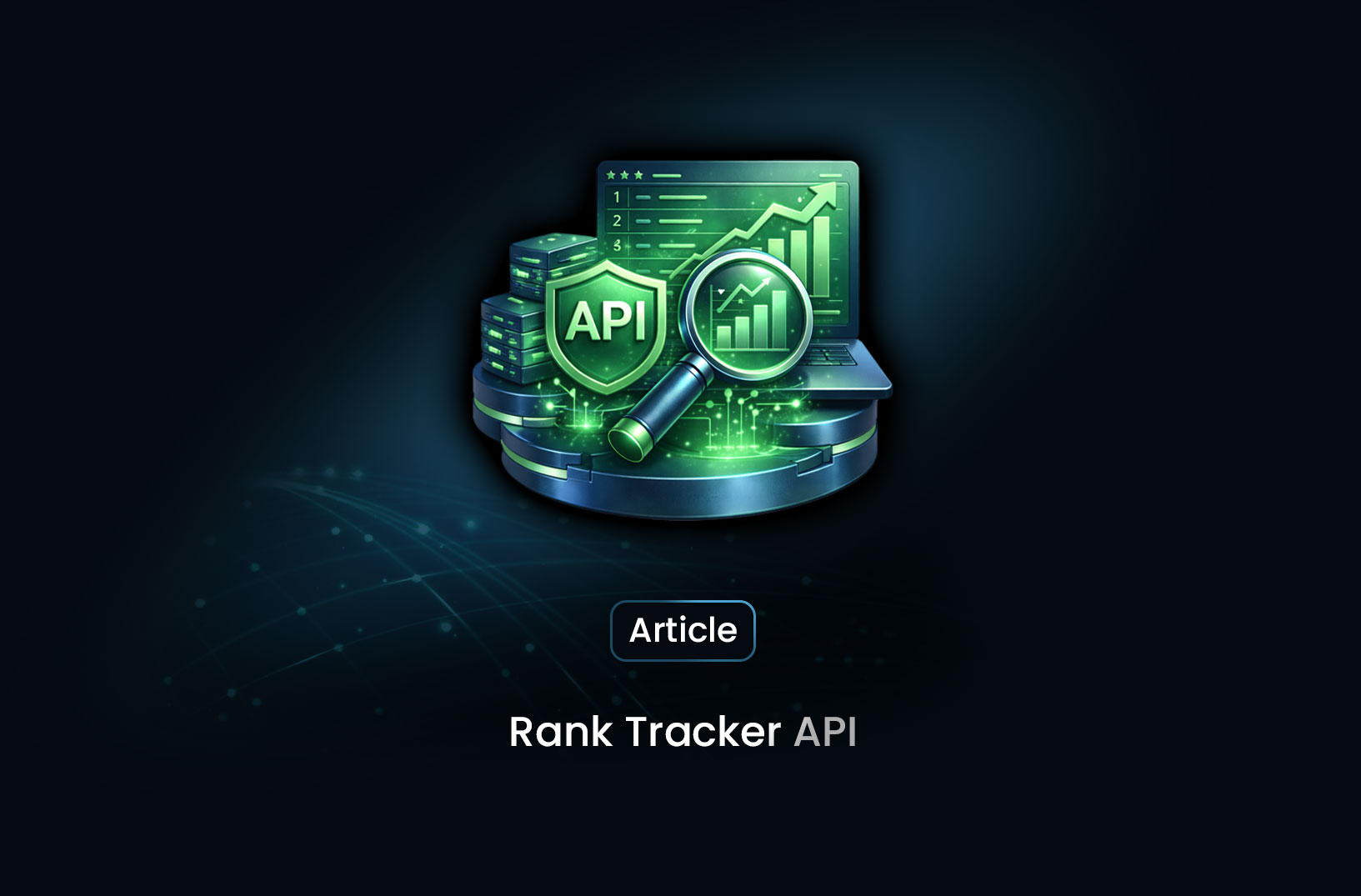
What Is a Rank Tracker API and How It Powers Modern SEO
ArticleSearch engine rankings are among the most important metrics in digital marketing and search engine optimization (SEO).
Search engine rankings are among the most important metrics in digital marketing and search engine optimization (SEO). Knowing where your pages stand for specific keywords helps you assess performance, monitor competitors, and refine strategy over time. Traditionally, SEO professionals relied on dashboards, dashboards, and manual exports. However, as data needs scale, Rank Tracker APIs have become essential. These APIs let developers access ranking data programmatically, feeding insights directly into custom software, dashboards, and automated workflows.
In this article, we explain what a Rank Tracker API is, how it works, typical use cases, key features to consider, and examples of popular APIs that teams use today.
What a Rank Tracker API Does
A Rank Tracker API is a web service that returns keyword ranking data from search engines like Google and Bing. Instead of manually checking positions on search result pages, you send a request to an API endpoint with parameters such as:
- Keyword you’re tracking
- Search engine (e.g., Google, Bing)
- Location and language (e.g., US desktop, UK mobile)
- Optional device type and other filters
The API responds with structured data, usually in JSON, that includes the rank position of a URL or domain for that keyword. Some APIs also return expanded results that include SERP features (e.g., featured snippets, local packs) and additional metadata.
Rank Tracker APIs abstract away the mechanics of searching, parsing, and location emulation. That lets developers focus on analyzing trends and integrating rank data into internal systems such as dashboards, alerts, or reporting pipelines.
Why Use a Rank Tracker API
Because SEO isn’t static, relying on manual tools becomes limiting as your keyword list grows. Rank Tracker APIs offer several advantages:
Automation and Scale
APIs let you automate regular rank checks (hourly, daily, or on demand) across hundreds or thousands of keywords without logging into a UI. This means you can build scheduled workflows that push ranking data into analytics platforms or internal dashboards.
Integration with Custom Tools
Instead of exporting CSVs and stitching data together manually, APIs feed real-time rank data directly into your CRM, BI tool (e.g., Tableau, Power BI), or custom SaaS platform for analysis or visualization.
Multi-Dimension Tracking
Good rank APIs support device (desktop vs. mobile), geo-location (country/region/city), and search engine variations. This helps ensure your SEO reports reflect real user contexts rather than generic rankings.
What to Look for in a Rank Tracker API
When evaluating rank tracking APIs for your SEO workflows, these core capabilities make a meaningful difference:
Search Engine Coverage
A quality API supports multiple search engines (Google, Bing, Yahoo, etc.) to give you broader visibility into search performance.
Geo-Targeting and Device Options
Rankings vary significantly across regions and device types. APIs should let you specify location and device so that the ranking data reflects the true context your audience uses.
SERP Feature Details
Beyond position number, APIs that return information about featured snippets, local packs, videos, ads, and other SERP features help you understand the type of content ranking, not just the rank itself.
Bulk and Historical Requests
For larger SEO programs, you often need batch keyword checks and historical rank comparisons over time. APIs that support bulk queries and historical data retrieval streamline these workflows.
Output Format and Ease of Integration
Structured output (typically JSON) and SDKs or clear documentation make it easier to connect a Rank Tracker API with your preferred languages and frameworks.
Popular Rank Tracker API Options
There are many choices in the market, each with its focus and strengths:
SerpAPI
A robust real-time API focused on delivering SERP data, including rank positions, across major search engines with clean JSON responses. It’s known for good documentation and broad search support.
DataForSEO
A flexible SEO data suite with rank tracking as one component. It supports ZIP-level targeting and historical rank values, making it suitable for agencies and integrated dashboards.
Zenserp
Designed for simplicity and affordability, it concentrates on core rank tracking with location and device options in a straightforward API.
Scrapingdog and Similar SERP APIs
More budget-friendly APIs focused on Google results and helpful for quick rank checks; they return structured JSON that developers can use to compute positions.
ProRankTracker API
An example of a rank tracking service that offers both live SERP checks and stored, historical ranking data retrievable via its API.
Rank Ranger Top50/Top100 APIs
These specialized endpoints return comprehensive rank lists (top 50 or top 100 results) that enhance rank analysis across many keywords and search engines.
In addition, many SEO platforms (e.g., SE Ranking, SEMrush, Ahrefs, Moz) provide their own APIs for rank data as part of larger suites, often with broader analytics tools included alongside ranking.
Typical Use Cases for Rank Tracker APIs
Rank Tracker APIs are used in a variety of scenarios across SEO and analytics practices:
Automated Reporting
Teams embed API calls into daily jobs to fetch fresh rank positions, automatically push to dashboards, and generate alerts when rankings slip.
Custom SEO Tools
Developers use APIs to build bespoke SEO tools for internal or client use, tailoring how rank data is visualized and acted upon.
Competitive Intelligence
APIs assist in comparing your keyword positions against competitors across regions and devices, helping guide content strategy and prioritization.
Integration with BI Systems
Rank data becomes part of larger data pipelines, feeding into business intelligence systems that also include traffic, conversions, and engagement metrics.
Getting Started with a Rank Tracker API
Most APIs require:
- An API key or token: To authenticate requests securely.
- Defining parameters: Keywords, search engine, location, and device type.
- Sending requests: Using HTTP libraries in your language of choice (e.g.,
axiosin JavaScript,requestsin Python). - Handling responses: Parsing the structured output and storing or visualizing as needed.
For developers, documentation and example requests are critical, well-documented APIs minimize integration friction and help you scale rank tracking across many keywords and projects.
Conclusion
As SEO evolves and search engines update frequently, having programmatic access to rank data has become indispensable for teams that rely on automation, custom reporting, and real-time insights. Manual dashboards and exports are no longer sufficient for scale, and APIs provide the backbone for modern SEO operations.
With the right Rank Tracker API in your toolkit, you can streamline reporting, power analytics workflows, and make more informed decisions about content strategy and performance.


Find more insights here
Structured vs Unstructured Data: What's the Difference?
Structured vs unstructured data explained — definitions, examples, key differences, semi-structured...
How to Scrape Data Directly Into Google Sheets (Step-by-Step Guide)
Learn how to scrape data directly into Google Sheets — using IMPORTHTML, IMPORTXML, Apps Script, and...
How to Export and Store Scraped Data: CSV, JSON, Database, and API Options
Learn how to export and store scraped data — CSV, JSON, SQLite, PostgreSQL, S3, and API delivery opt...