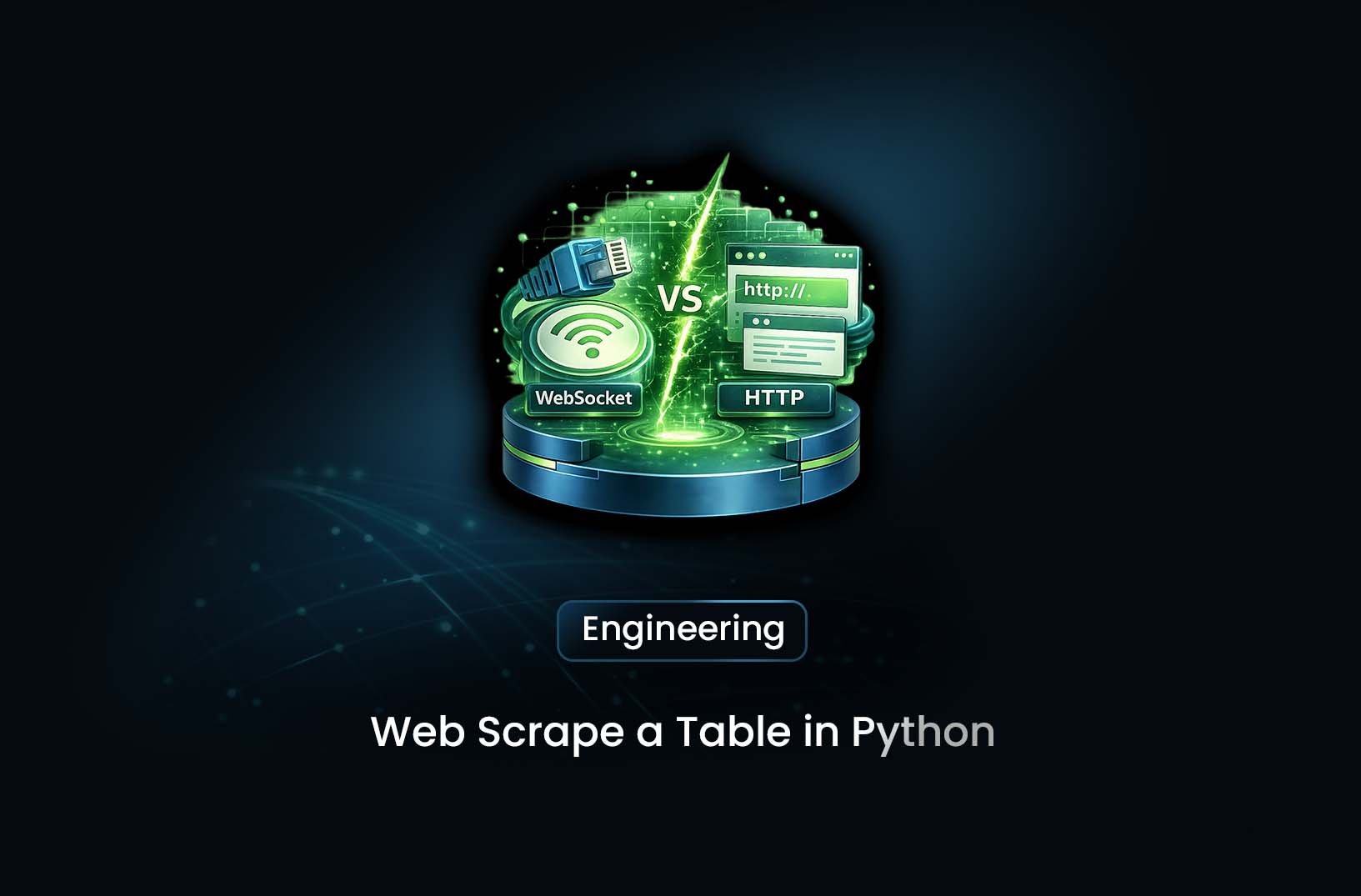
WebSocket vs HTTP: Understanding the Difference and When to Use Each
ArticleModern applications depend on network communication protocols to exchange data between clients and servers.
Modern applications depend on network communication protocols to exchange data between clients and servers. Two of the most important are HTTP (HyperText Transfer Protocol) and WebSocket. At a high level, both enable communication over the web, but they are designed for different patterns and use cases. Choosing the right one can boost performance, reduce resource usage, and improve user experience.
What Is HTTP?
HTTP is the foundational protocol of the World Wide Web. It’s designed around a simple request–response model:
- A client (like a browser or script) sends a request to a server.
- The server processes that request and returns a response.
- Once the response is delivered, the connection is typically closed (or reused for another request).
In this pattern, communication always begins with the client asking for something, and the server responding. That works well for traditional tasks like loading web pages, requesting API data, or submitting forms, because each interaction is discrete and independent. A client doesn’t generally stay connected waiting for updates.
Key Characteristics of HTTP
- Stateless: Each request is independent; the server does not retain information about prior requests unless you build that state yourself (e.g., with cookies or tokens).
- Unidirectional: The server only responds to client requests, not the other way around.
- High overhead: Every request carries HTTP headers, which can be large compared to the actual data being sent.
HTTP works on standard ports (80 for HTTP and 443 for HTTPS) and is supported universally across browsers, proxies, and servers. It excels for document delivery, RESTful APIs, and file downloads.
What Is WebSocket?
WebSocket is a different protocol designed for bidirectional, real-time communication between a client and a server. It starts with an HTTP handshake but then moves to a persistent connection that stays open until explicitly closed by either side.
After the initial handshake (using an HTTP Upgrade header), the transport switches from HTTP to WebSocket, and both parties can send messages anytime without waiting for a new request. This gives WebSocket full-duplex communication, meaning data can flow in both directions simultaneously.
Key Characteristics of WebSocket
- Persistent connection: The connection stays open, reducing the cost of establishing new connections.
- Bidirectional: Both client and server can send messages independently over the same connection.
- Low latency: Once connected, there’s minimal overhead per message compared to repeatedly opening and closing connections.
- Supports real-time applications: Excellent fit for chat, live feeds, games, and collaborative apps.
Because the connection remains open, WebSocket is stateful, the server keeps information about the connection as long as it lasts. This contrasts with HTTP’s stateless nature.
How They Work: Side by Side
Here’s a conceptual comparison of the two protocols:
| Feature | HTTP | WebSocket |
|---|---|---|
| Communication Pattern | Request–response, client first | Full-duplex, bidirectional |
| Connection Lifetime | Short-lived (one request/response) | Long-lived (persistent) |
| State | Stateless per request | Stateful connection |
| Overhead | High (headers on each request) | Low (minimal framing after handshake) |
| Latency | Higher due to repeated handshakes | Lower once the handshake completes |
| Typical Use Cases | Web pages, REST APIs, file transfers | Real-time chat, live updates, games |
With HTTP, a client must keep asking the server for new information (polling) if it wants up-to-date data. WebSocket, by contrast, lets the server push updates as soon as they are available, without any expensive new request.
When to Use HTTP vs WebSocket
Use HTTP When:
- You’re building a typical web application where the client requests resources as needed.
- Data changes infrequently and updates don’t need to arrive instantly.
- Universal compatibility and caching matter (e.g., static content, REST APIs).
HTTP is simple, well-understood, and supported by essentially every network device, CDN, and proxy server, which is why it remains the dominant protocol for traditional web traffic.
Use WebSocket When:
- You’re developing applications with live data that must update instantly (e.g., chat, stock tickers, multiplayer games).
- You need server-initiated messages without constant client polling.
- Reducing overhead and latency matters for frequent updates.
In real-time apps, WebSocket’s persistent connection and low overhead can offer significant performance benefits over HTTP polling or long polling techniques.
Practical Considerations
Implementation and Scaling
WebSockets introduce additional complexity. Because connections are persistent and stateful, servers must manage potentially thousands of open sockets and handle reconnection logic for dropped connections, a more complex architecture than simple HTTP servers.
Firewall and Proxy Support
Although WebSocket begins with an HTTP handshake, some older firewalls and proxies may not fully support the upgraded connection without additional configuration, something HTTP alone rarely faces.
Compatibility
HTTP is universally supported, making it easier to deploy and debug. WebSocket requires modern browsers and a server that understands the protocol, but support is now widespread.
Real-World Use Cases
HTTP:
- Serving web pages
- REST API responses
- File uploads and downloads
WebSocket:
- Live chat systems
- Collaborative editing tools
- Real-time financial data feeds
- Multiplayer games and interactive UIs
Many systems today use both: HTTP for general resource delivery and WebSocket for specific real-time channels.
Conclusion
HTTP and WebSocket are both fundamental to web communication, but they solve different problems. HTTP excels at delivering discrete resources and managing stateless interactions across the internet with broad compatibility. WebSocket, on the other hand, shines in real-time, bidirectional communication, where low latency and persistent connections make all the difference.
Understanding the strengths and limitations of each lets you design systems that deliver the best performance and user experience for your specific needs.


Find more insights here

How to Scrape Real Estate Listings Without Getting Blocked (Step-by-Step Guide)
Learn how to scrape real estate listings without getting blocked — detection avoidance, proxy rotati...

How to Scrape Travel Fares From Multiple Countries Using Residential Proxies
Learn how to scrape travel fares from multiple countries using residential proxies — geo-targeted pr...
How to Monitor Website Changes Automatically With a Web Scraping API
Learn how to monitor website changes automatically using a web scraping API — content diffing, chang...