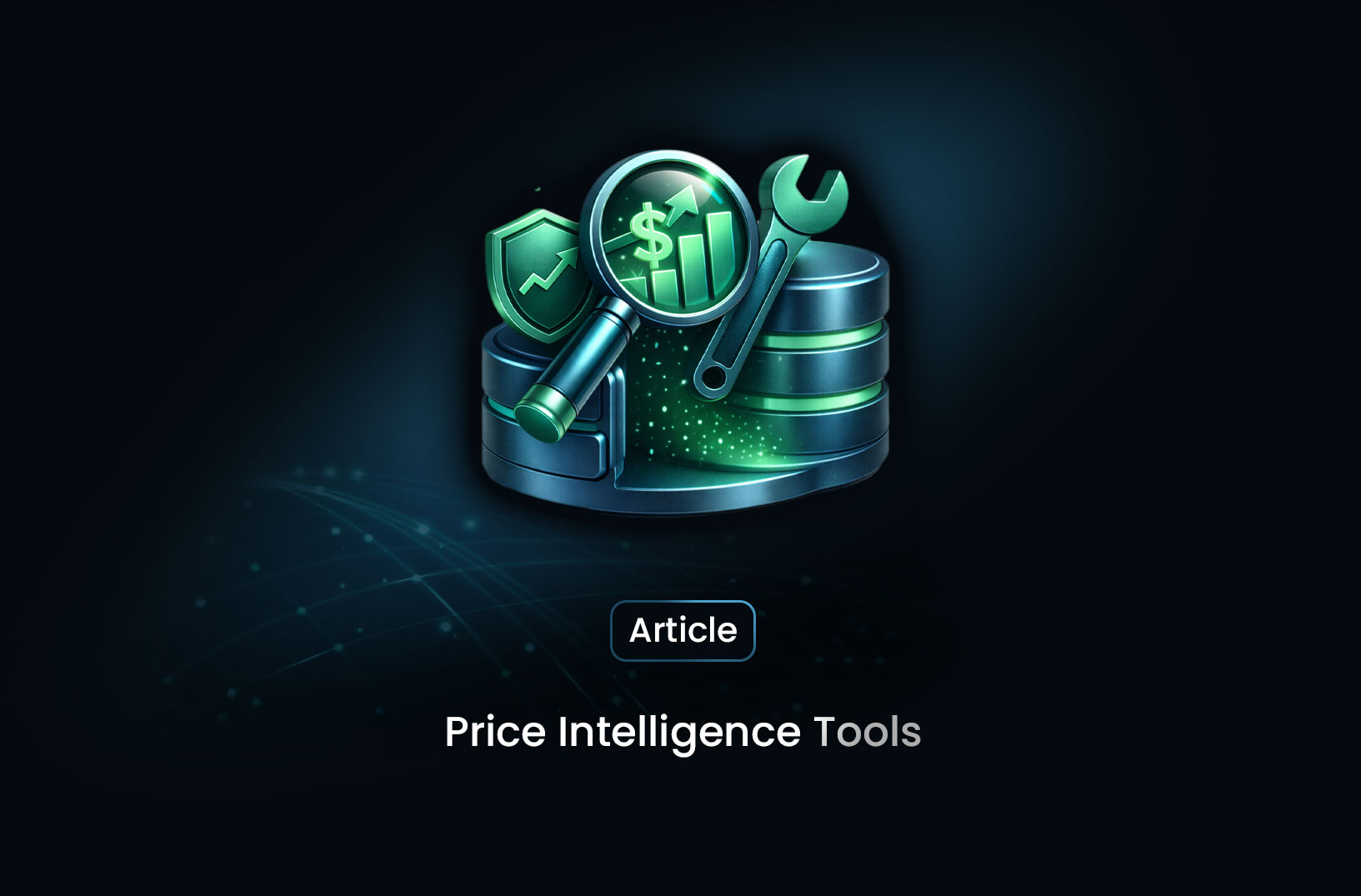
Price Intelligence Tools: What They Are and How They Drive Competitive Advantage
ArticleIn today’s fast-moving digital marketplaces, pricing decisions can make or break a business.
In today’s fast-moving digital marketplaces, pricing decisions can make or break a business. Customers compare prices across channels instantly, competitors update prices frequently, and market demand changes rapidly. In this environment, relying on manual monitoring or intuition to set prices is no longer effective. That’s where price intelligence tools come in: software platforms that gather, analyze, and visualize pricing data to help businesses make informed strategic decisions.
What Are Price Intelligence Tools?
Price intelligence tools are software solutions designed to collect pricing and related competitive data from multiple sources, synthesize it, and provide actionable insights for pricing strategy. These platforms automatically track prices, promotions, availability, and trends across competitors, marketplaces, and even internal sales history. The goal is to enable businesses to understand the pricing landscape clearly and react quickly with data-backed pricing decisions.
At their core, price intelligence tools:
- Monitor competitor prices across websites, marketplaces, and retail channels.
- Provide analytics and trend insights to identify opportunities and risks.
- Support dynamic pricing by recommending pricing adjustments based on market conditions.
- Enable reporting and alerting so pricing teams can act when significant changes occur.
Why Price Intelligence Matters
Pricing is a critical lever for profitability, customer perception, and competitive positioning. Modern price intelligence tools help businesses accomplish several key objectives:
Real-Time Competitive Awareness
These tools track competitor prices and promotions in real time, providing a current view of how the market is evolving. Instead of manually visiting sites or exporting spreadsheets, teams receive continuous updates.
Smarter Pricing Decisions
Armed with comprehensive data about how competitors price similar products and how markets fluctuate, pricing teams can determine the right price point that balances sales velocity and profitability.
Dynamic and Automated Pricing
Price intelligence platforms often include automated dynamic pricing engines. These systems adjust prices based on predefined strategies, such as matching a competitor, staying at a specified margin above average, or balancing inventory and demand, with minimal manual intervention.
Improved Profit Margins and Revenue Growth
By identifying pricing opportunities, such as underpriced items or products with room to increase without losing demand, businesses optimize margins and capture more revenue. Some companies report notable sales improvements after implementing data-driven pricing strategies.
Time and Resource Savings
Manual price monitoring is resource-intensive and prone to oversight. Automation reduces the human workload and frees teams to focus on strategy and execution.
Typical Features of Price Intelligence Platforms
Price intelligence tools vary in sophistication, but most include a core set of essential features:
Competitor Price Tracking
This feature continuously monitors competitor prices and promotions across websites, marketplaces, and regional storefronts. It helps pricing teams understand how competitors position similar products and react quickly when price changes occur.
Historical Price Analysis
Historical price tracking allows businesses to review past pricing movements over weeks, months, or seasons. By analyzing this data, teams can identify recurring patterns, evaluate the impact of previous pricing decisions, and plan future price changes more confidently.
Dynamic Pricing and Rule Engines
Dynamic pricing engines automatically adjust prices based on predefined rules, such as maintaining a minimum margin or staying within a certain range of a competitor’s price. More advanced systems use algorithmic or AI-based recommendations to adapt pricing in response to demand, competition, and inventory levels.
Alerts and Reporting
Alerts notify teams when significant pricing events occur, such as a major competitor discount or a sudden price increase. Reporting dashboards consolidate large volumes of pricing data into clear visual summaries, making it easier to monitor trends and support decision-making across teams.
AI and Automation
AI-powered features analyze large datasets to uncover pricing patterns that may not be obvious through manual analysis. These systems can help forecast market behavior, recommend optimal price points, and reduce the need for constant manual intervention.
Stock and Market Availability Monitoring
This capability tracks product availability and stock status across competitors and marketplaces. Understanding when competitors are out of stock or running low helps businesses adjust pricing and capture demand without unnecessary price reductions.
Popular Price Intelligence Tools
The market for price intelligence tools has expanded considerably in recent years, with options suited for different business sizes and e-commerce complexity:
- Prisync — Tracks competitor pricing and supports rule-based dynamic pricing. It’s known for ease of use and support for multi-channel strategies.
- Price2Spy — Offers price monitoring, alerting, and comprehensive reporting across a wide range of sites.
- Competera — Focuses on AI-driven pricing optimization and analytical insights for retailers.
- Bright Insights (Bright Data) — Combines robust proxy infrastructure with advanced analytics for real-time price tracking.
- Intelligence Node — Tracks competitor pricing with high data accuracy and broad global coverage.
Each of these platforms offers unique strengths — from simple price comparison dashboards to enterprise-grade analytics with AI forecasting.
Practical Use Cases
Different industries and business models benefit from price intelligence in varied ways:
- E-commerce Retailers: Monitor marketplace prices, optimize product pricing, and adjust based on seasonal trends.
- Hospitality: Set room rates dynamically using data from nearby hotels and demand patterns.
- Manufacturing: Track supplier prices for raw materials and negotiate better buy-side terms.
- Market Research: Benchmark pricing across products and channels to refine overall business strategy.
Choosing the Right Price Intelligence Tool
Selecting a price intelligence tool requires evaluating several factors:
1. Coverage and Accuracy
Ensure the tool can monitor the competitors and marketplaces most relevant to your business with high reliability.
2. Data Freshness and Speed
Real-time or near-real-time pricing data is critical in fast-moving markets.
3. Analytics and Reporting Capabilities
The value of the data depends on how well you can interpret and act on it through dashboards and reports.
4. Repricing and Automation Features
If your strategy involves dynamic pricing, look for tools with built-in repricing engines.
5. Integration and Scalability
Integration with internal systems (like ERP or inventory tools) and the ability to scale with growth are important for long-term use.
MrScraper: Price Intelligence and Scraping Combined
Price intelligence depends on reliable and up-to-date pricing data. Building your own data pipeline can be costly and complex, involving proxy management, anti-bot handling, and dynamic site rendering. That’s where MrScraper adds value.
MrScraper’s scraping capabilities provide:
- Robust data collection from even protected sites to power price intelligence tools.
- Proxy and anti-bot management so you can gather price data without interruptions.
- Structured data output that feeds directly into analytics, dashboards, or pricing engines.
By combining strong scraping infrastructure with a price intelligence workflow, MrScraper helps businesses build data-driven pricing strategies without investing heavily in in-house web crawling systems.
Conclusion
Price intelligence tools have become essential for businesses competing online or in dynamic market environments. They automate the collection and analysis of pricing data, enabling teams to react quickly, optimize profitability, and make strategic decisions with confidence. From small retailers to global brands, these systems turn competitive pricing into a measurable asset rather than an opaque process.
Whether you’re just starting with price monitoring or scaling to AI-assisted dynamic pricing, understanding how to leverage price intelligence tools effectively will drive more competitive pricing strategies and better bottom-line results.


Find more insights here
How to Scrape Websites Without Getting Blocked: A Complete Guide
A complete guide to scraping websites without getting blocked — proxy rotation, browser fingerprinti...
Web Scraping API Guide: How They Work and When to Use One
A complete guide to web scraping APIs — how they work, the different types, when to use one vs. buil...
How to Scrape Multiple Pages With a Web Scraping API (Step-by-Step Guide)
Learn how to scrape multiple pages with a web scraping API — handling URL, offset, cursor, and JavaS...