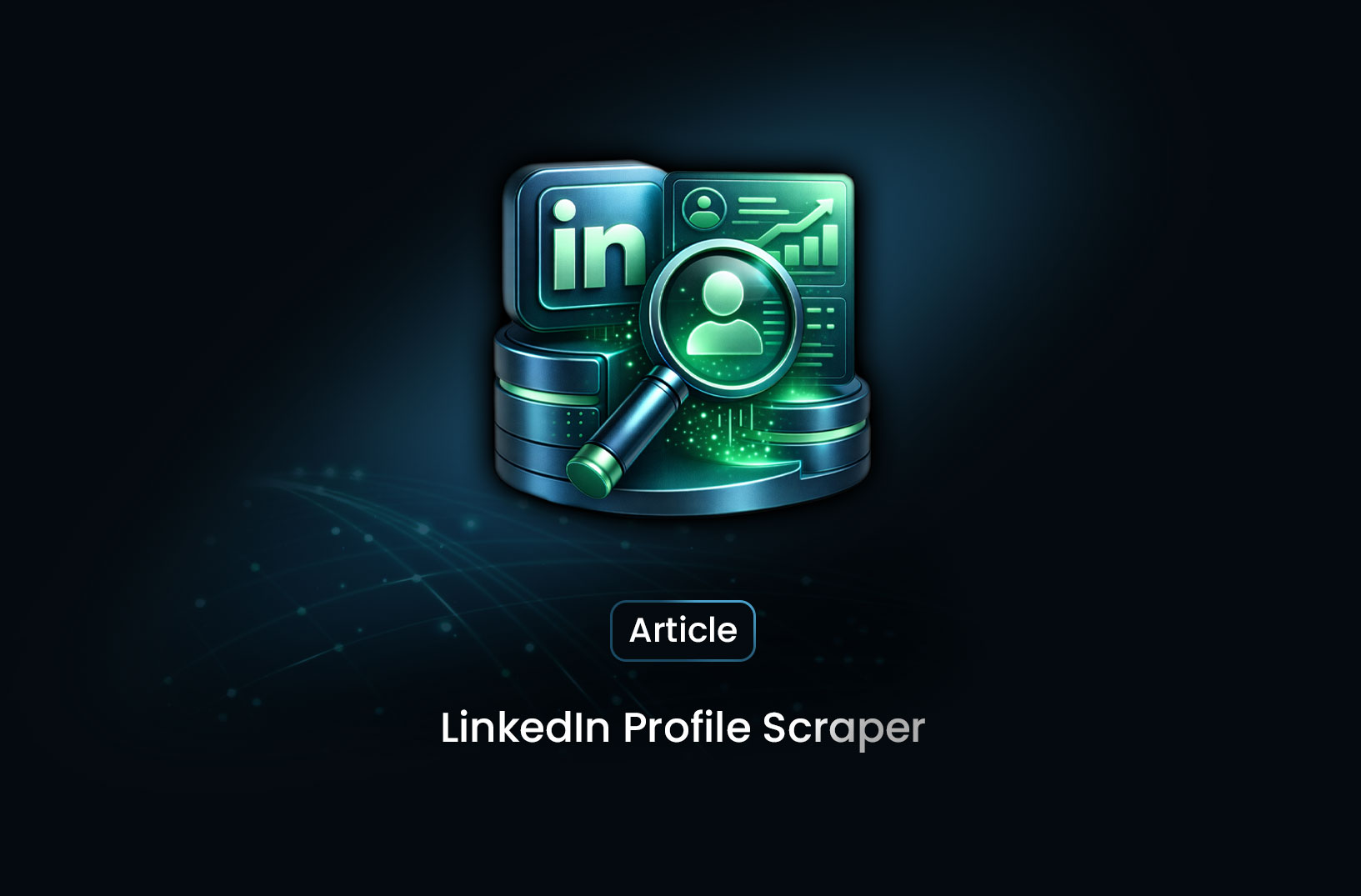
LinkedIn Profile Scraper: What You Need to Know in 2026
ArticleLinkedIn is the world’s largest professional network, with more than a billion members sharing their career history, skills, and connections.
LinkedIn is the world’s largest professional network, with more than a billion members sharing their career history, skills, and connections. For recruiters, sales teams, product managers, and market researchers, extracting structured data from LinkedIn profiles can provide valuable insights for talent sourcing, lead generation, competitive research, and business intelligence.
A LinkedIn profile scraper is a tool or script designed to collect data from LinkedIn member profiles in an automated way. It fetches structured information (such as name, job title, company, location, education, and skills) and turns it into a usable format like CSV or JSON for downstream workflows.
This article explains how LinkedIn profile scraping works, what technologies and tools are commonly used, the practical challenges involved, and legal and ethical considerations you should be aware of.
What Is a LinkedIn Profile Scraper?
A LinkedIn profile scraper is a piece of software that retrieves data from LinkedIn profiles using automated methods. These tools typically simulate some form of user interaction with the LinkedIn site or API, collect page content, and parse it into structured fields.
Scraped fields often include:
- Full name
- Current job title and company
- Employment history
- Education background
- Skills or endorsements
- Public contact info (if available)
Scrapers can run as standalone programs, cloud-hosted automation services, browser extensions, or APIs that accept a LinkedIn URL and return structured data.
Why Scrape LinkedIn Profiles?
Automating LinkedIn data extraction can support a range of business processes:
- Talent sourcing and recruiting: Quickly build candidate lists based on specific role requirements.
- Lead generation and sales intelligence: Identify prospects who match buyer personas based on title, industry, or location.
- Market analysis: Aggregate professional profiles to understand industry trends.
- CRM enrichment: Match LinkedIn profile attributes to internal customer records.
- Competitive benchmarking: Analyze professional movement across competing firms.
Without automation, manually copying profile data from LinkedIn is time-consuming and impractical at scale.
How LinkedIn Profile Scraping Works
LinkedIn scraping can be implemented in several ways. Each approach has trade-offs in complexity, reliability, and risk.
1. Browser Automation Tools
Browser automation frameworks like Playwright or Puppeteer can mimic real user browsing by loading LinkedIn pages, scrolling, and interacting with dynamic elements. This helps render JavaScript-heavy pages and capture data that isn’t visible in raw HTML.
However, LinkedIn actively detects automated browsing patterns and may trigger blocking measures, CAPTCHA challenges, or rate limits.
2. Third-Party Scraper APIs
Platforms such as Phantombuster, Proxycurl, and other scraping APIs specialize in extracting LinkedIn profile information behind the scenes. These services typically handle proxies, session management, and anti-bot defenses so you don’t have to build that infrastructure yourself.
These APIs let you request structured data by passing a URL or search criteria and return fields like name, title, company, and sometimes public email addresses.
3. Chrome Extensions and Browser Plugins
Extensions like Dux-Soup or other LinkedIn scraping add-ons inject scripts into LinkedIn profile pages to extract visible data. These tools operate inside your browser and can be useful for small-scale scraping or CRM enrichment.
However, browser plugins are often easier for the platform to detect, and heavy use can lead to account restrictions.
4. Custom HTTP Request Scripts
Some tools use HTTP clients (e.g., Python’s requests or Node.js libraries) combined with proxies and session cookies to fetch LinkedIn page HTML and parse it with a library such as Cheerio or BeautifulSoup. This approach avoids browser automation but requires careful handling of headers, cookies, and LinkedIn’s dynamic content.
Common Challenges With Scraping LinkedIn
Extracting LinkedIn data reliably at scale is technically demanding due to several factors:
Dynamic Content and Infinite Scroll
LinkedIn uses AJAX and JavaScript to load profile sections and search results dynamically, which means scrapers must render the page fully to capture all relevant data elements.
Anti-scraping Defenses
LinkedIn uses CAPTCHAs, rate limiting, IP blocks, and bot detection systems to prevent automated access. Without proper proxy rotation and human-like behavior simulation, scrapers get blocked quickly.
Page Structure Changes
LinkedIn frequently updates its HTML structure and CSS class names, which can break parsers that depend on specific selectors. Continuous maintenance is necessary to keep scraping workflows operational.
Session Management
Scraping detail pages often requires a logged-in session. Requests without session cookies may return incomplete data or trigger LinkedIn’s security systems, increasing the risk of account restrictions.
Legal and Ethical Considerations
Before building or deploying a LinkedIn scraper, understand that LinkedIn’s terms of service prohibit most forms of automated data collection:
“You agree that you will not … develop, support, or use software … to scrape the Services or otherwise copy profiles and other data from the Services.”
Violating these terms can lead to account suspension, network bans, or civil action from LinkedIn.
In the United States, court decisions such as hiQ Labs v. LinkedIn Corp. found that scraping publicly accessible data may not necessarily violate the Computer Fraud and Abuse Act (CFAA), but it still does not override contractual obligations with LinkedIn.
Beyond legal risks, ethical considerations include respecting user privacy, avoiding collection of sensitive personal data, and adhering to data protection laws such as the GDPR or CCPA where applicable.
Tools and APIs for LinkedIn Profile Scraping
Depending on your technical skills and requirements, several tools and services make profile scraping more accessible:
Phantombuster
A cloud-based automation platform with a LinkedIn Profile Scraper phantom that collects names, titles, companies, education, and more. Its cloud execution lets you schedule and run jobs without maintaining infrastructure.
Apify LinkedIn Scraper
Apify provides an actor that can extract profile and company data using a logged-in cookie, making it easier to retrieve complete profile details. It’s well documented and suitable for small-scale projects.
Proxycurl, Nimble, and Other APIs
Specialized APIs convert profile URLs into structured data via a REST interface. These handle many scraping complexities internally, including proxies, rate limits, and parsing logic.
Browser Extensions
Tools like Dux-Soup and other Chrome plugins let you extract profile data directly within your browser without coding. They’re useful for manual or low-volume tasks but carry a higher risk of detection.
Best Practices for LinkedIn Scraping
If you choose to work with LinkedIn profile scraping for legitimate, ethical research or internal applications, follow these best practices:
- Scrape only publicly available information. Avoid bypassing authentication or accessing private sections.
- Respect rate limits and throttle requests. High-frequency requests trigger blocks quickly.
- Use rotating proxies responsibly. This helps mimic diverse user traffic and reduces IP bans.
- Monitor LinkedIn’s site changes. Profile page structures can change often, requiring parser updates.
- Follow data privacy laws. Comply with GDPR, CCPA, and other regional regulations.
Conclusion
LinkedIn profile scrapers can unlock valuable professional data for recruiting, sales enablement, and research, but they also operate in a complex legal and technical environment. Whether you choose to build your own scraper using automation frameworks or rely on third-party APIs, it’s essential to understand the challenges, respect LinkedIn’s terms, and handle data ethically.
For teams that need reliable, scalable extraction without managing scraping infrastructure themselves, managed scraping services and APIs can offer a practical path forward. Just be sure that your use case complies with applicable laws and platform policies before deploying any scraping workflow.


Find more insights here
How to Scrape Real Estate Listings Without Getting Blocked (Step-by-Step Guide)
Learn how to scrape real estate listings without getting blocked — detection avoidance, proxy rotati...
How to Scrape Travel Fares From Multiple Countries Using Residential Proxies
Learn how to scrape travel fares from multiple countries using residential proxies — geo-targeted pr...
How to Monitor Website Changes Automatically With a Web Scraping API
Learn how to monitor website changes automatically using a web scraping API — content diffing, chang...