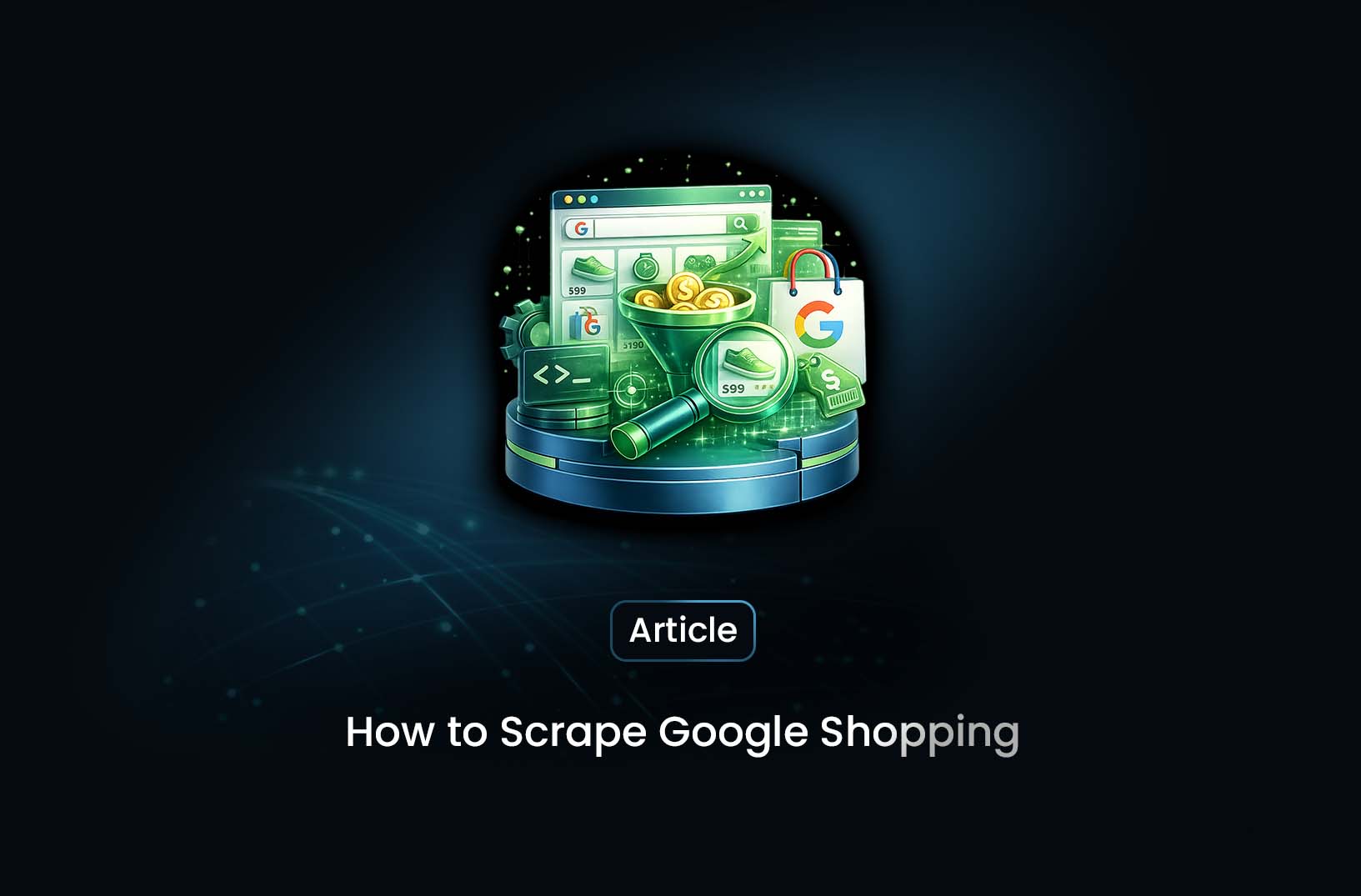
How to Scrape Google Shopping: A Complete Guide to E-commerce Data Extraction
ArticleGoogle Shopping is one of the largest product discovery platforms online.
Google Shopping is one of the largest product discovery platforms online. It aggregates product listings from thousands of merchants around the world and displays prices, seller information, product images, ratings, and more. For businesses, analysts, and developers, extracting structured data from Google Shopping can unlock insights for competitive pricing, market research, product trend analysis, and inventory benchmarking.
In this article, we’ll explain what it means to scrape Google Shopping, how you can approach it technically, the kinds of data you can extract, and the key challenges and considerations you should be aware of before you start.
What It Means to Scrape Google Shopping
Google Shopping scraping refers to the automated process of collecting structured data from Google Shopping web pages. Unlike official merchant APIs that provide product feeds for sellers, Google does not offer a public API that exposes all product listings and search results to third-party developers. As a result, scraping tools interact directly with the HTML or rendered page content to extract information such as:
- Product titles and descriptions
- Prices and currency information
- Merchant or seller names
- Product URLs and image links
- Ratings and review counts (where shown)
- Promotional badges and availability indicators
This scraped information can be converted into formats like CSV, JSON, Excel, or database records for further analysis and use.
Typical Steps in Scraping Google Shopping
The basic workflow for scraping Google Shopping data usually follows these steps:
1. Send a Search Request
A scraper begins by constructing a search query or product list URL. That often looks similar to a Google Shopping search URL with a specific query parameter or the platform’s specific endpoint that filters results to shopping results.
2. Retrieve the HTML or Rendered Page
Google Shopping pages are often rendered dynamically with JavaScript. A simple HTTP GET request may return only partial HTML without product data, so many scrapers use headless browsers (such as Selenium or Playwright) or JavaScript rendering services to load the page as a real browser would.
3. Parse and Extract Data
Once the page content is fully loaded, the scraper navigates the rendered HTML structure to extract the desired elements (such as product names, prices, seller names, and image URLs) and pulls those into structured fields.
4. Normalization and Data Export
After extraction, the raw data is cleaned and normalized (ensuring consistent formatting, currency values, etc.) and then exported to a usable format like JSON, CSV, or a database. Some services also allow scheduling and automation for recurring data collection.
Tools and Techniques You Can Use
There are several approaches to scraping Google Shopping, and the right choice depends on your scale, technical preference, and operational requirements.
Custom Scripts and Headless Browsers
Experienced developers may write Python or JavaScript scripts that use libraries such as Selenium, Playwright, or Puppeteer. These tools can render pages and execute JavaScript just like a normal browser, making it possible to access dynamically rendered product data.
This method gives you full control over the workflow, but it also means you need to manage proxies, handle CAPTCHAs, and ensure you’re respecting request rates to avoid being blocked.
Scraping APIs
Scraping APIs abstract much of the complexity. Instead of managing rendering and anti-bot measures yourself, you make API calls that return structured shopping data. These services handle proxies, retries, and localization, returning clean JSON or CSV. Many scraping API providers include templates or dedicated endpoints for Google Shopping search.
Example categories of scraping APIs include:
- Generic e-commerce scraper APIs that include Google Shopping as a target
- Universal web scrapers configured with anti-bot and proxy handling
- Low-code/no-code platforms that let you set keywords and download results without writing custom code
Open-Source Projects
There are community-maintained projects, such as scrapers available on GitHub, that focus on extracting Google Shopping data. These can be a useful starting point for learning or small-scale projects, though they typically require maintenance and additional tooling for scale and reliability.
What Data You Can Extract
The kinds of data you can extract from Google Shopping depend on the page layout and your scraper’s logic, but common fields include:
- Product Name: The title of the listing
- Price: Including currency
- Seller or Merchant: The store offering the product
- Product URL: Link to the listing page
- Image URLs: Thumbnails or higher-resolution images
- Ratings and Reviews: Star ratings and number of reviews when shown
This structured data can power price comparison dashboards, competitive price monitoring, inventory research, and consumer trend analysis.
Geographic Variation and Localization
Google Shopping results vary significantly by region, language, and currency. Two users searching for the same product in different countries may see completely different sellers and prices.
Good scrapers either use location-specific Google domains (e.g., .co.uk, .de) or use proxies that allow the request to appear from a specific country. This makes extracted data more accurate and relevant for localized price intelligence.
Challenges in Scraping Google Shopping
There are several technical hurdles when scraping Google Shopping effectively:
- Anti-scraping measures: Google employs systems that detect and block automated requests, especially at scale.
- JavaScript-rendered content: Product cards are often dynamically loaded, requiring proper rendering.
- Blocking and CAPTCHAs: Without proxies or specialized tooling, your scraper may be blocked or forced to solve CAPTCHAs.
- Frequent UI changes: Google may update page structure at any time, requiring scraper adjustments.
Using specialized services that manage proxies and anti-bot protections can significantly reduce these operational challenges.
Practical Use Cases
Here are some real-world ways scraped Google Shopping data is used:
- Competitive Pricing: Track price changes for similar products across sellers and regions.
- Market Trend Analysis: See how product availability and pricing evolve over time.
- Product Feed Validation: Compare your own listings to those shown on Google Shopping.
- Retail Research: Measure seasonal shifts and category saturation.
Conclusion
Scraping Google Shopping gives access to structured product and pricing data that can be valuable for e-commerce intelligence, competitive analysis, and market research. A successful scraper must handle dynamic content, localized results, and anti-scraping protections while operating within legal and ethical boundaries.
Whether you choose headless browsers, custom scripts, or scraping APIs, make sure your approach fits the scale of your project and respects both technical and legal considerations.


Find more insights here
Scrape Bing Search: A Practical Technical Guide
Bing scraping blocked? Discover how to bypass rate limits and bot detection to extract URLs, titles,...
FilterBypass: Unblocking Restricted Sites in a Simple Way
FilterBypass is a free web proxy that acts as an intermediary between your browser and the target si...

YouTube.com Unblocked: Accessing YouTube When It’s Restricted
Learn how to access YouTube unblocked on school, work, or regional networks. Explore VPNs, proxies,...