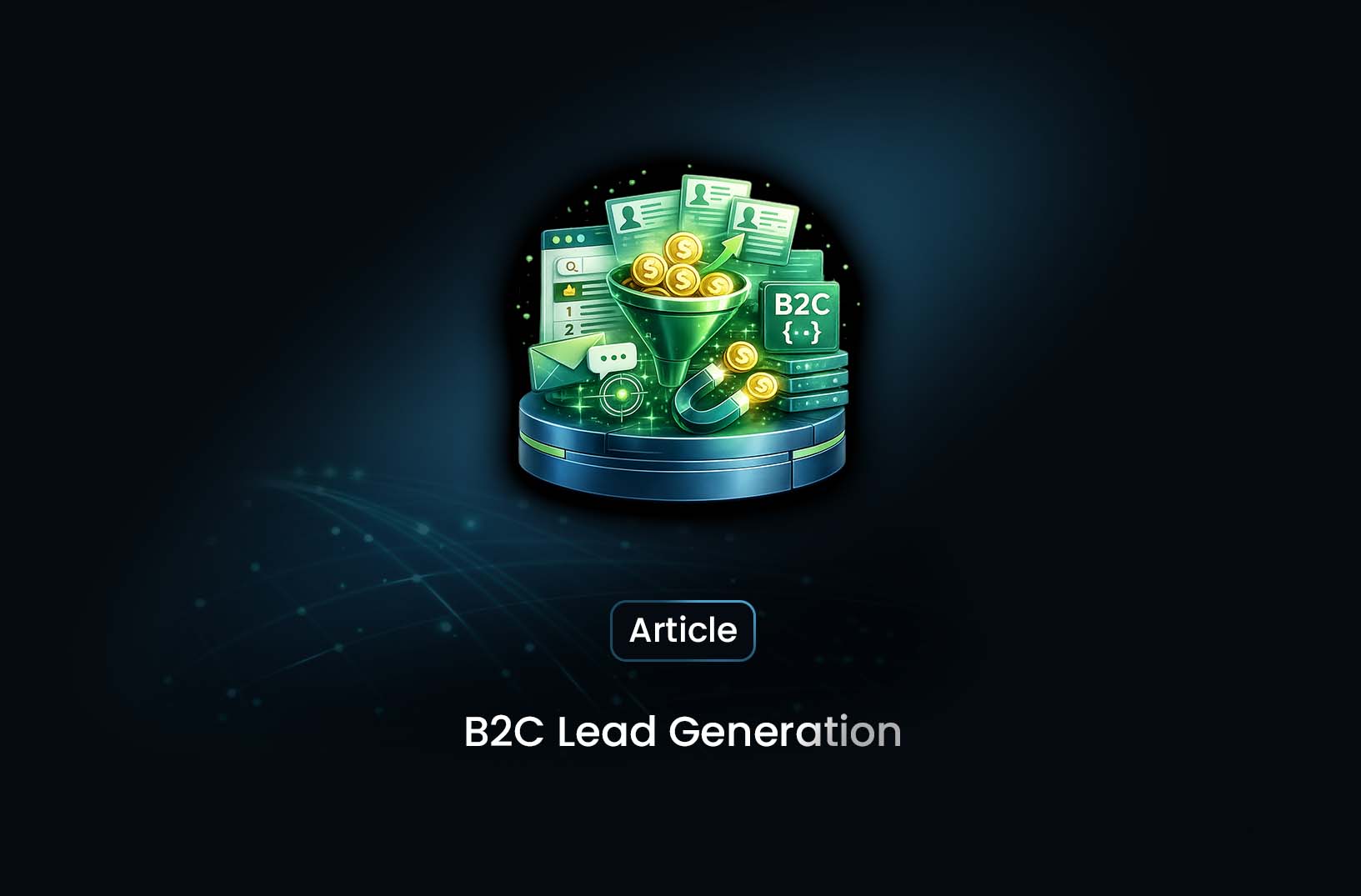
B2C Lead Generation: What It Is and How It Works Today
ArticleLead generation is a core part of marketing for any business that sells directly to individual consumers.
Lead generation is a core part of marketing for any business that sells directly to individual consumers. In a B2C context, the aim is to attract interest from potential customers and drive that interest toward a purchase or engagement with your brand. That starts with capturing basic contact details or audience intent and ends with converting those leads into paying customers.
Unlike B2B marketing, which focuses on long sales cycles, detailed research content, and building relationships with decision-makers, B2C lead generation works on shorter cycles. Individual consumers tend to make purchase decisions faster, often driven by emotion, convenience, or immediate needs rather than extensive evaluation.
In this article we’ll explore what B2C lead generation means, why it matters, common strategies marketers use, and practical tips you can apply to grow interest and conversions across various channels.
What B2C Lead Generation Is
At its simplest, B2C lead generation refers to the process of attracting individual consumers — not other businesses, and collecting information that allows your marketing and sales teams to engage with them. This usually involves capturing an email address, phone number, or other contact detail in exchange for something of value.
B2C lead gen is designed to work with fast-moving purchase decisions. Consumers often make decisions based on emotion, trust, social proof, and perceived value. A well-executed lead generation strategy helps you capture interest and then nurture it into a purchase or ongoing relationship.
Key Strategies for Generating B2C Leads
Social Media Advertising and Engagement
Social platforms are among the most effective channels for capturing B2C leads. Platforms like Instagram, Facebook, TikTok, and Pinterest allow highly targeted paid advertising based on interests, demographics, and behaviors. Organic content also plays a role in building awareness, strengthening trust in your brand, and encouraging sharing.
Posts, stories, reels, and short videos can attract viewers and direct them to a landing page or offer where they provide their contact details. Engagement that feels authentic (such as polls, interactive content, or user-generated content) often improves lead capture.
Lead Magnets and Incentives
Offering something valuable in exchange for contact information is a tried-and-true tactic. These lead magnets might be discount codes, free guides, early access to products, or samples. People are far more likely to opt in when they feel the offer benefits them directly.
Lead magnets work especially well when they align with your audience’s immediate interests, such as a “best of” guide, exclusive tutorial, or special promotion.
Content Marketing and SEO
High-quality content attracts organic traffic and provides a platform for capturing leads. Blogs, articles, how-to guides, video content, and other informational resources establish your brand’s authority while giving users a reason to engage. Optimizing these pieces for search engines helps bring organic visitors to your site, where you can capture their interest through subscribe forms or embedded offers.
Video content, particularly, has become an essential component in many B2C strategies. Short product videos, tutorials, and lifestyle clips that address audience needs can increase visibility and trust.
Landing Page Optimizations and Pop-Ups
Well-designed landing pages focused on capturing leads often outperform generic web pages. Offering simple forms, clear calls to action, and compelling reasons to sign up increases your chances of collecting consumer contact details. Strategic elements like timed pop-ups that present offers or reminders can also help, provided they respect user experience.
Landing pages that load quickly, emphasize benefits, and reduce friction tend to perform better overall. Simple design paired with compelling copy increases conversion rates.
Email Marketing and Nurturing Sequences
Once you have a consumer’s contact information, email campaigns allow you to maintain engagement over time. Personalized content, tailored product suggestions, follow-up offers, and reminders, such as abandoned cart emails, can all improve conversion rates. Segmenting your audience by behavior or preferences helps increase relevance and response rates.
Automated follow-ups keep your brand in consumers’ minds and deliver offers at moments when users are more likely to act.
Retargeting and Personalized Ads
Not every consumer will convert during their first interaction. Retargeting campaigns serve ads to users who visited your site but didn’t sign up or purchase. These campaigns can remind them of what they viewed or offer special deals to encourage return visits and lead capture.
Retargeting often performs best when coupled with segmentation and personalization so that ads are relevant rather than generic.
Differences Between B2C and B2B Lead Generation
In B2B marketing, lead generation often involves longer sales cycles, deeper research content, relationship building, and multiple touchpoints before a purchase decision is made. Decision-makers consider ROI, technical fit, and strategic alignment with internal goals.
In contrast, B2C lead generation targets individual consumers whose decisions are usually faster. Marketing for B2C tends to focus more on emotional appeal, brand recognition, convenience, and immediate value. Approaches like social ads, influencer promotions, and direct incentives typically perform well.
Tracking and Measuring Your Lead Generation Efforts
Effective B2C lead generation is measurable. Tracking key metrics like:
- Conversion rates on landing pages
- Click-through rates on social ads
- Email open and click rates
- Cost per lead
helps you understand what works and what needs adjustment. Using analytics tools, CRM platforms, or marketing automation solutions enables you to refine your strategy as trends shift or new channels emerge.
Conclusion
B2C lead generation remains a dynamic discipline in digital marketing. Consumers respond to content that feels relevant, genuine, and useful. Using a combination of paid media, compelling incentives, content engagement, and thoughtful follow-up sequences increases the quality and volume of leads you generate.
By understanding your audience’s interests and behavior, and applying data-informed tactics, B2C marketing teams can build pipelines that not only capture leads but also drive revenue growth over time.


Find more insights here
How to Scrape Real Estate Listings Without Getting Blocked (Step-by-Step Guide)
Learn how to scrape real estate listings without getting blocked — detection avoidance, proxy rotati...
How to Scrape Travel Fares From Multiple Countries Using Residential Proxies
Learn how to scrape travel fares from multiple countries using residential proxies — geo-targeted pr...
How to Monitor Website Changes Automatically With a Web Scraping API
Learn how to monitor website changes automatically using a web scraping API — content diffing, chang...